
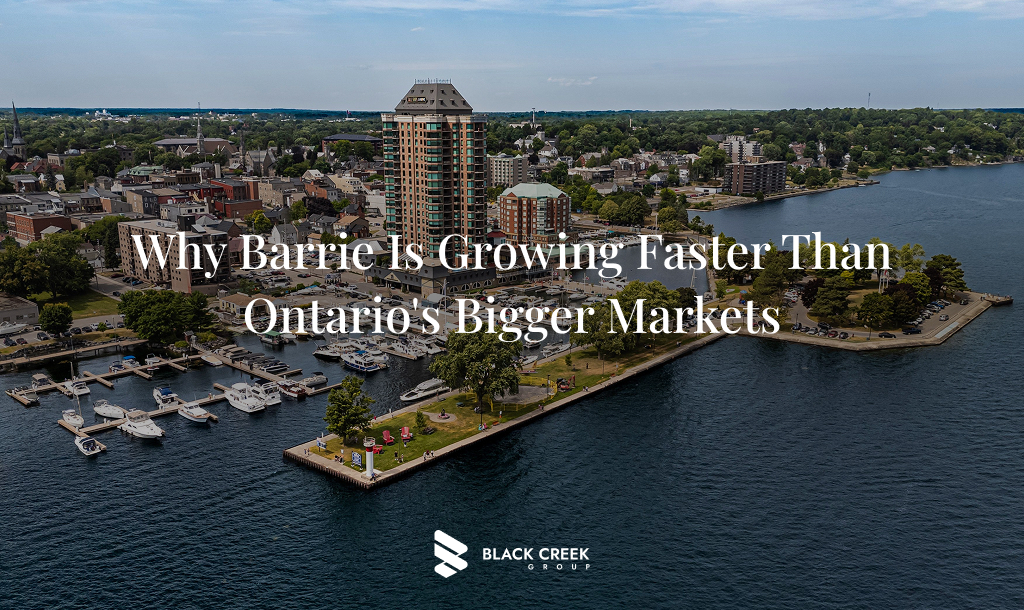
Why has a city an hour north of Toronto become one of the fastest-growing places in the province, rather than staying a quiet lakeside town people drive past on the way somewhere else? The short answer is that Barrie stopped being a place people leave for the city and became a place people move to instead. Barrie, Ontario real estate growth over the past decade has been driven by a specific combination of population inflow, transit access, and land economics that is not easy to replicate in already-built-out markets closer to Toronto.
The Population Numbers Behind the Growth
According to the City of Barrie’s own growth management data, the city’s population reached 167,176 in 2025, up from roughly 147,000 in 2017. The province’s official growth plan projects the city will reach 210,000 residents by 2031 and 253,000 by 2041. Most of that increase comes from migration rather than births, with people moving in from elsewhere in Ontario and from outside Canada. That kind of sustained, migration-driven population growth is one of the clearest early signals that a rental market can absorb new supply.
Barrie Housing Market Trends
New listings have not kept pace with how many people are arriving each year, which has kept both resale prices and rents firmer in Barrie than in many comparable secondary markets. Housing starts have picked up, but a meaningful share of new supply is still low-density product, leaving a gap for purpose-built rental in a market where a growing share of new residents are renters rather than buyers, at least in their first years in the city.
Investing in Barrie Real Estate
The case for putting capital into this market comes down to a fairly simple comparison. Land and construction costs in Barrie remain well below what the same project would cost inside Toronto’s city limits, while the population growth feeding rental demand is tracking at a pace many larger, already-mature markets cannot match. That combination, lower basis and strong absorption, is the setup institutional capital typically looks for when weighing Barrie, Ontario real estate growth against a B-market that is still early in its cycle rather than one that has already been priced up by a wave of competing buyers.
Simcoe County Development Projects
Barrie sits inside Simcoe County, and growth in the surrounding municipalities reinforces rather than competes with what is happening inside city limits. New employment lands, highway expansion, and residential development across the broader county are adding jobs and rooftops that feed commuter and rental demand back into Barrie’s core, particularly for anyone working in the county but wanting to live somewhere with more amenities and a shorter commute to a GO station.
Downtown Barrie Purpose-Built Rental
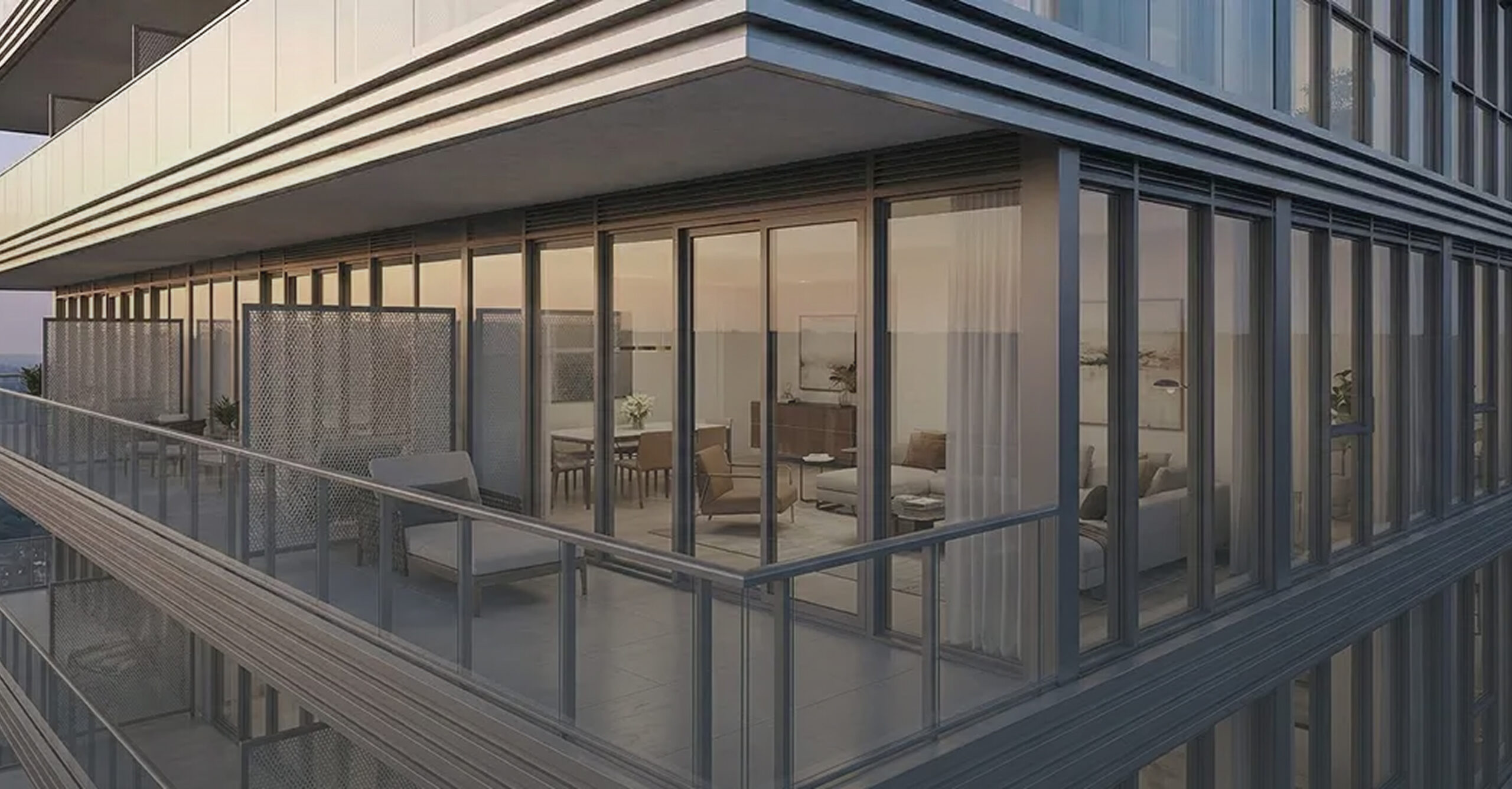
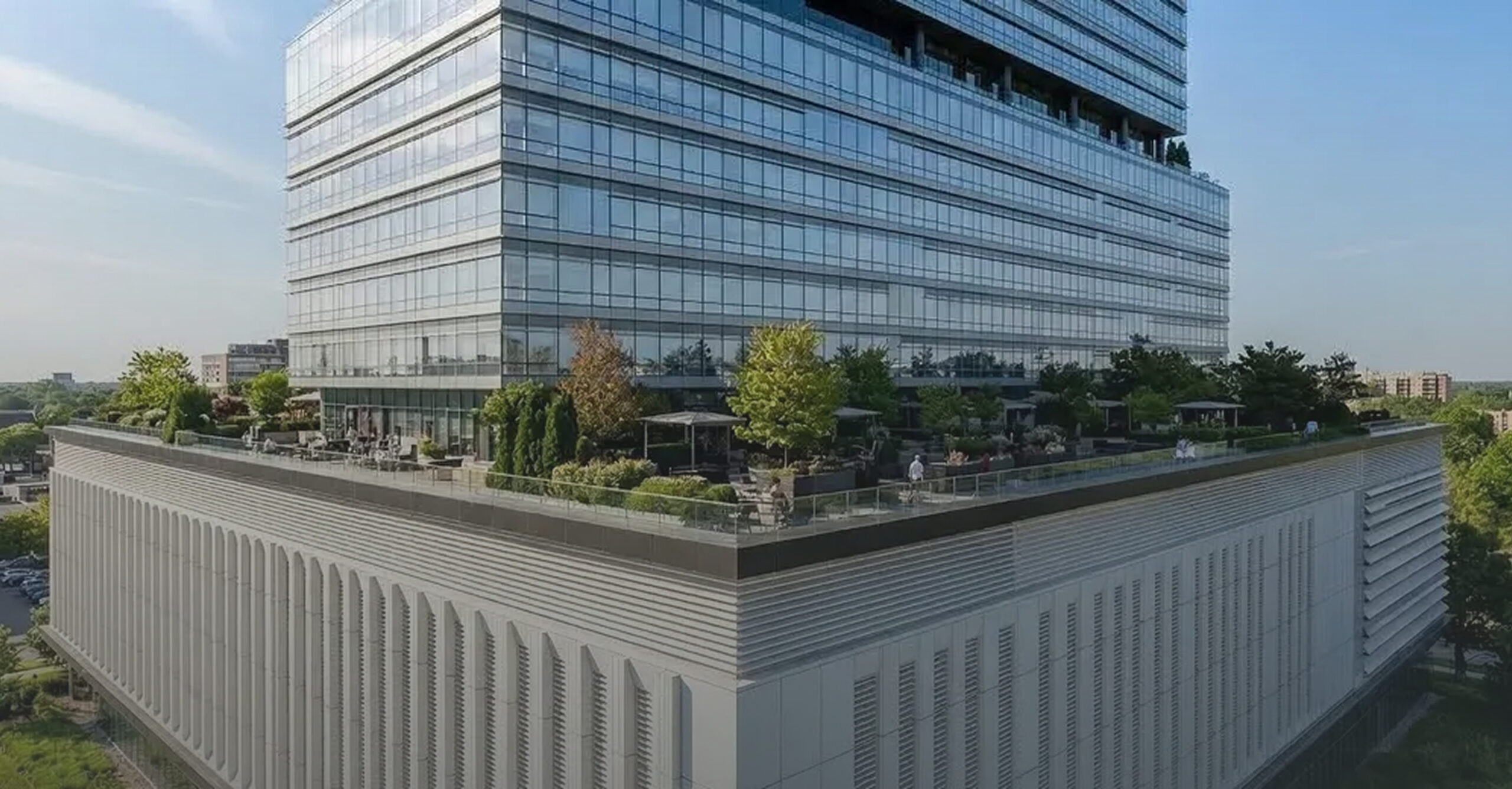
The city’s downtown core, designated an Urban Growth Centre under the province’s planning framework, has become the focal point for new purpose-built rental towers rather than low-rise infill. Black Creek Group’s own projects reflect this shift directly. Project Sophia, a 268-unit purpose-built rental tower, and its companion project Vespra, a 446-unit tower in the same growth centre, together add 714 units of new rental supply to a downtown core where new stock has been scarce relative to demand.
Barrie Growth Corridor
Barrie’s position along Highway 400 and the GO Transit Barrie line places it inside what planners and investors both describe as a growth corridor extending north from the GTA. Roughly ninety minutes from downtown Toronto by train, Barrie offers a commute that is long but workable, which has made it a realistic option for people priced out of housing closer to the city while still needing periodic access to it. That corridor position is a large part of why Barrie, Ontario real estate growth has outpaced many other secondary Ontario cities that sit further from reliable transit access to the GTA.
Real Estate Developers in Barrie
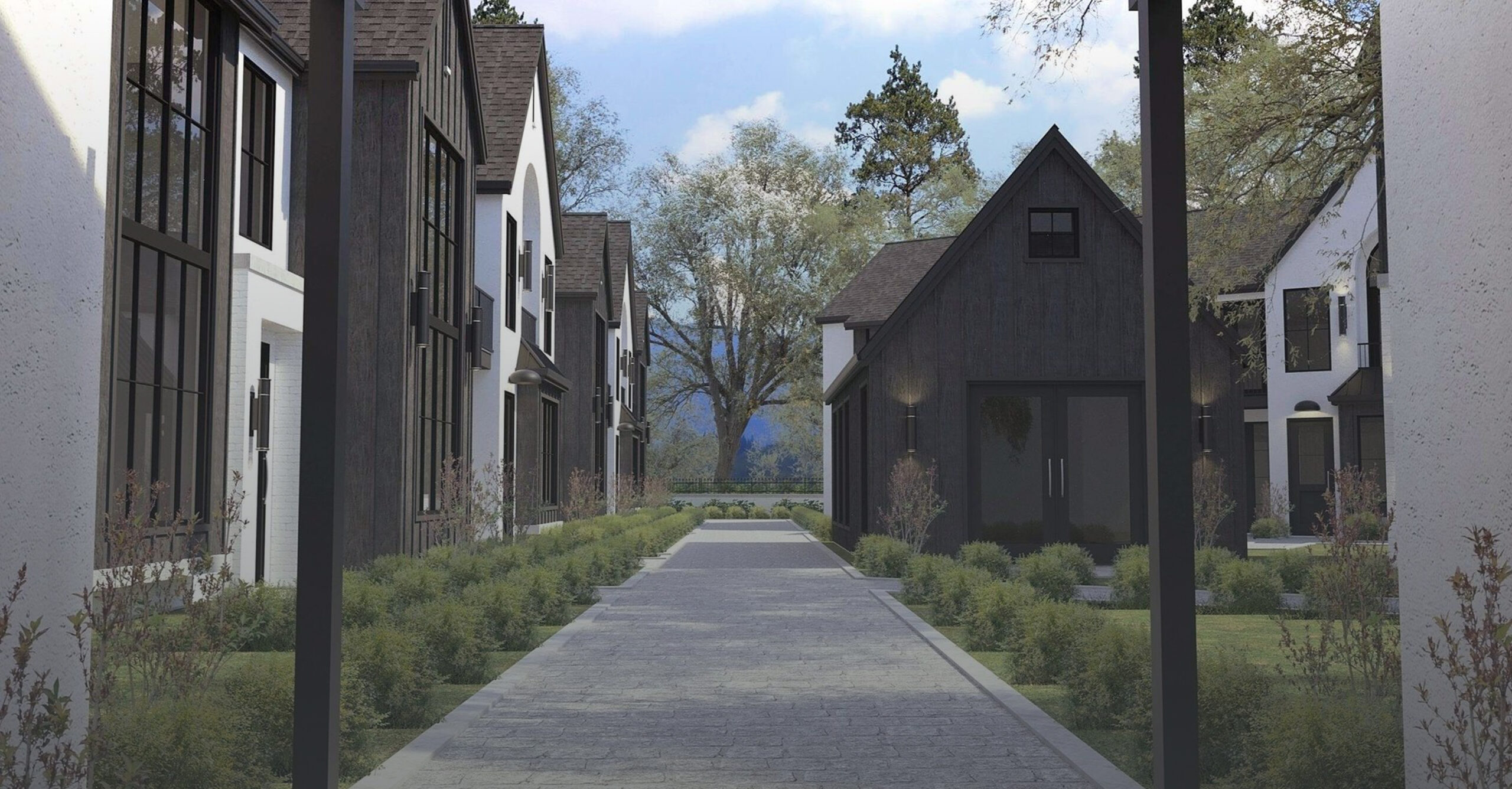
The developer landscape in Barrie has shifted over the past several years from mostly local, smaller-scale builders toward a mix that now includes institutional and regionally focused developers pursuing larger purpose-built rental towers. This shift reflects growing confidence in Barrie, Ontario real estate growth as a structural trend rather than a short-term spike, and a belief that the city’s population trajectory can support the density and financing structures larger rental projects require, rather than only the townhouse and low-rise product that characterized most of the city’s earlier growth.
The Risks That Could Slow This Growth
None of this guarantees continued Barrie, Ontario real estate growth at the same pace indefinitely. Interest rates, provincial planning policy, and the pace of transit investment can all shift the trajectory, and any one of them could slow absorption faster than population projections alone would suggest. What the data does show so far is a city whose fundamentals have held up for long enough to look structural, a pattern that shows up across other Canadian growth markets heading into next year as well. Population growth, transit access, and a cost basis that is still favourable relative to the GTA have all moved in the same direction for close to a decade now, which is a longer run than a temporary spike would typically produce.
FAQs
Why is Barrie considered one of Ontario’s strongest demand-led growth corridors? Because its population growth has consistently outpaced new housing supply, driven mainly by migration, while its position on Highway 400 and the GO Transit Barrie line keeps it connected to the GTA job market.
What unique demographic trends are driving rental demand in downtown Barrie? A growing share of new residents arriving through migration tend to rent before buying, and downtown Barrie’s designation as an Urban Growth Centre has concentrated new purpose-built rental development in the core rather than the suburbs.
How does Barrie’s proximity to the GTA influence its purpose-built rental market? Its roughly ninety-minute GO train connection to downtown Toronto makes it a realistic option for people who need periodic access to the GTA but cannot afford housing closer to the city, supporting steady rental demand.
What municipal incentives exist for multi-family residential builders in Barrie? The city has used development charge adjustments and streamlined approvals for purpose-built rental in targeted growth areas, aimed at encouraging more rental supply in the downtown core specifically.
Is the rental market expansion in Barrie driven by young professionals or downsizers? Both groups contribute, but young professionals and newcomers to the region make up a larger share of renters in new downtown towers, while downsizers tend to appear more often in the resale condo and townhouse market.